


Aug 16, 2026
Laciana Valley: Nature, Mining Heritage, and the Biosphere Reserve That Captivated Jesús Calleja
Laciana Valley: Exploring the Lush Nature and Mining Heritage of the Biosphere Reserve That Captivated Jesús Calleja
If you don’t know our Laciana Valley yet, get ready to discover a natural paradise famed for its immense botanical and wildlife diversity, exquisite local cuisine, and rich coal-mining heritage.
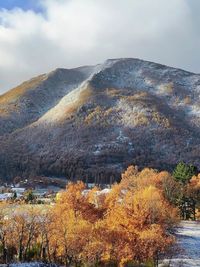
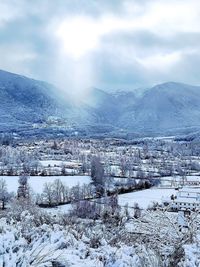
Capturing the beauty and significance of the Laciana Valley in just a few lines is no easy task, yet we’re going to try. Our hope is that if you haven’t visited this unique corner of northern Spain yet, you’ll be inspired to come—to find serenity among our mountain peaks, savor our traditional cured meats and local delicacies, spot majestic brown bears, or learn more about our most treasured bird, the Cantabrian capercaillie. We also invite you to delve into our mining past, stroll beneath thousand-year-old yew trees, and admire the architectural charm of traditional thatched stone huts (teitos), classic Laciana houses, fountains, watermills, stone troughs, and small churches, chapels, and hermitages. We are convinced this land is a true treasure. Are you ready to discover it?
Where Is the Laciana Valley Located?
Located in the northwest of León, the Laciana Valley Biosphere Reserve spans 217 square kilometers, bordering Babia and Omaña to the east, the El Bierzo region to the south, and the Principality of Asturias to the north and west. Its immense ornithological value has also earned it designation as a Special Protection Area for Birds (SPA), integrating it into the Natura 2000 network. Its peaks soar above 2,000 meters, crowned by the imposing El Cornón, the highest summit in the range. Down in the valley, the Sil River waters and breathes life into the landscape.
Among Yew Trees, Bears, and Birds: Our Flora and Fauna
If you haven’t breathed in our pure mountain air yet, welcome to Eden. The first thing that will strike you is the diversity of our forests, which cover 37% of the territory and feature woodlands of birch, rowan, maple, yew, holly, hazel, ash, and beech trees. The centuries-old yew trees of
Rioscuro de Laciana and Villar de Santiago are particularly remarkable. It is also well worth admiring the wildflower that lights up the high-mountain pastures (brañas): the wild daffodil (grichándana).
When it comes to wildlife, we are a vital refuge for the brown bear. Although there is no closed census because they roam freely across the Cantabrian Mountains, Laciana—together with Alto Sil—is home to the highest density of the western subpopulation, estimated at around 250 individuals (nearly 70% of the roughly 370 bears in the entire mountain range, according to the Brown Bear Foundation). A network of wildlife viewpoints allows you to spot them safely in their natural habitat.
The Laciana Valley also boasts a rich variety of bat and fish species, while our woods are teeming with chamois, broom hares, roe deer, and wild boars. And of course, it is a true birdwatcher’s paradise: alongside the endangered Cantabrian capercaillie, standout species include the Eurasian nuthatch, goldcrest, bullfinch, Eurasian jay, and short-toed snake eagle, as well as barn owls, grey partridges, tawny owls, tits, herons, storks, kites, and kestrels.
A Proud Mining Past
Mining played a pivotal role in shaping the history of the Laciana Valley, serving as the region's main economic engine until its decline in the 1980s. Industrial coal mining began here in the mid-19th century, reaching its golden age in the 20th century under the Minero Siderúrgica de Ponferrada (MSP) company. The extraction of bituminous coal and anthracite drove the construction of major infrastructure, including a mining railway built in 1921 to connect the valley with Ponferrada.
Today, you can walk along that former railway line via a scenic hiking trail: the Laciana Greenway (Camino Natural Vía Verde de Laciana). While iconic pits like Pozo María closed in the early 21st century and the final mines ceased operations in 2018, initiatives like La Mina en Vivo ("The Living Mine") allow visitors to experience and learn about this proud industrial heritage firsthand.
Livestock Farming and Crafts: Driving Forces Alongside Tourism
Laciana is also a land of artisans and shepherds. Pastoral life remains active in the brañas, dotted with traditional stone huts (cabanas and chozos), some of which have been restored for leisure and rural tourism. In recent years, extensive livestock farming has also gained prominence, particularly the breeding of cattle—specifically the native Asturiana de los Valles breed. Furthermore, the valley is home to Spain’s only working artisan hydraulic dairy, "La Popular," built in 1910, which still harnesses the power of river water to churn traditional butter.
Local craftsmanship is equally rich and varied, encompassing basketry, woodcarving, blacksmithing, pottery, natural cosmetics, and beekeeping.
Rich Cultural and Architectural Heritage
There isn't a single village in Laciana without its own church, hermitage, or chapel. Highlights include the 11th-century Church of San Julián in Robles de Laciana—declared a Site of Cultural Interest and one of the few Leonese Romanesque churches located outside the Camino de Santiago—and the Church of San Andrés in Sosas de Laciana, which features several medieval anthropomorphic tombs. Other notable examples of religious architecture include the Chapel of El Cristo in Caboalles de Abajo, housing a prized 17th-century Baroque altarpiece, and the Sanctuary of Nuestra Señora de Carrasconte, a devotional shrine set amid peaceful nature right on the border with the Babia Valley.
You also shouldn't miss Casa La Cortina in San Miguel de Laciana or the Casona de Sierra Pambley in Villablino—a quintessential example of a traditional noble manor house (casa hidalga)—as well as the Álvarez Carballo Watermill in Caboalles de Abajo, the archaeological sites of La Zamora and La Muela, and the Hillfort Villages Interpretation Center in Rioscuro de Laciana. If you are fascinated by fossils and minerals, the Geological Classroom in Robles de Laciana displays over 500 original specimens.
If you want to keep exploring our idyllic Laciana Valley, check out the link below to watch the episode that Spanish adventurer and TV host Jesús Calleja dedicated to his homeland of León alongside journalist Mercedes Milá on his show Volando Voy.
- Nature
Todas las categorías
Latest articles

- Gastronomy
Aug 30, 2026
Best Places to Eat in Villablino: 5 Restaurants to Taste Traditional Laciana Valley Dishes
These are spots …

- Tradition
Aug 23, 2026
5 Reasons You Can’t Miss San Bartolo: The Highlight of Summer in Caboalles de Abajo
Save the date …

- Nature
Aug 16, 2026
Laciana Valley: Nature, Mining Heritage, and the Biosphere Reserve That Captivated Jesús Calleja
Laciana Valley: Exploring …
También te puede interesar


